
At the Seat at The Table event “Searching for Amelia,” Rick Pettigrew, executive director of the Archaeological Legacy Institute, walked the room through the actual operational plan for investigating the object in the Nikumaroro lagoon. It is a six-day sail, a hand-cut trail, a floating equipment convoy, and five working days on site.
Here is how the team intends to answer a question that has been open since 1937.
Why the Object Became Visible When It Did
The timeline starts with a storm.
A major weather event in March 2015 caused visible damage to the island’s forest. The first satellite image showing the object dates to April 2015, and a series of images after that shows the same object again and again.
Each image looks slightly different depending on water depth, water conditions, camera angle and time of day. But the sequence holds from roughly 2015 to 2021, after which the object appears to have been covered over by sediment again.
Pettigrew’s interpretation is straightforward:
The object was likely there the whole time. The 2015 storm surge swept sediment off it and made it visible from above — the same way a storm clears sand off a shipwreck on a beach and reveals what was always underneath.
“My interpretation is that the object was there all along, but the storm surge in 2015 swept the sediment off it and made it visible from above. It’s similar to a shipwreck on the beach that’s covered by sand, and then a storm clears it off and you see it.”
Rick Pettigrew · at Seat at the Table
The Journey to the Site
The expedition departs by ship from Tarawa on October 7. From there it is a six-day sail to Nikumaroro.
Reaching the site itself is its own logistical problem:
- Two boats must be brought around through the passage and into the lagoon, timed to high tide so they can float over the reef
- A trail roughly 300 yards long must be cut through tropical forest between the outer beach and the lagoon
- All equipment and gear must be hauled across that trail as quickly as possible
- The team then meets the boats and ferries equipment across the lagoon to the site
- Everything gets set up on the sand pit before work can begin
Speed matters here, because the clock is short once they arrive.
Building an Operating Base on an Uninhabited Island
Before excavation begins, the team establishes infrastructure:
- Starlink internet for live connectivity from the site
- A solar power station
- A weather station
- A water level transducer to measure tides
- A security camera so the site can be monitored remotely from the office
For a site this remote, that setup is what turns a landing into a functioning research operation.
How You Investigate Something Underwater and 90 Years Old
Underwater archaeologists from a Pensacola-based firm specializing in underwater archaeology will join the team, and the investigation proceeds in deliberate stages.
Remote sensing first
The team will run a series of passes over the object using:
- Two different types of magnetometers
- Multiple sonar devices
- A hydro probe, which means physically probing down through the sediment to make contact with the object
After those passes, the team expects to know where the object is, roughly what it is, and how deep it sits.
Then careful exposure
Only then does a hydraulic dredge come into play, removing sediment from the top of the object to expose enough of it for visual identification.
Pettigrew was clear that full excavation is not the goal. With only five days on the island, the team will expose enough to identify.
Why They Know What to Look For
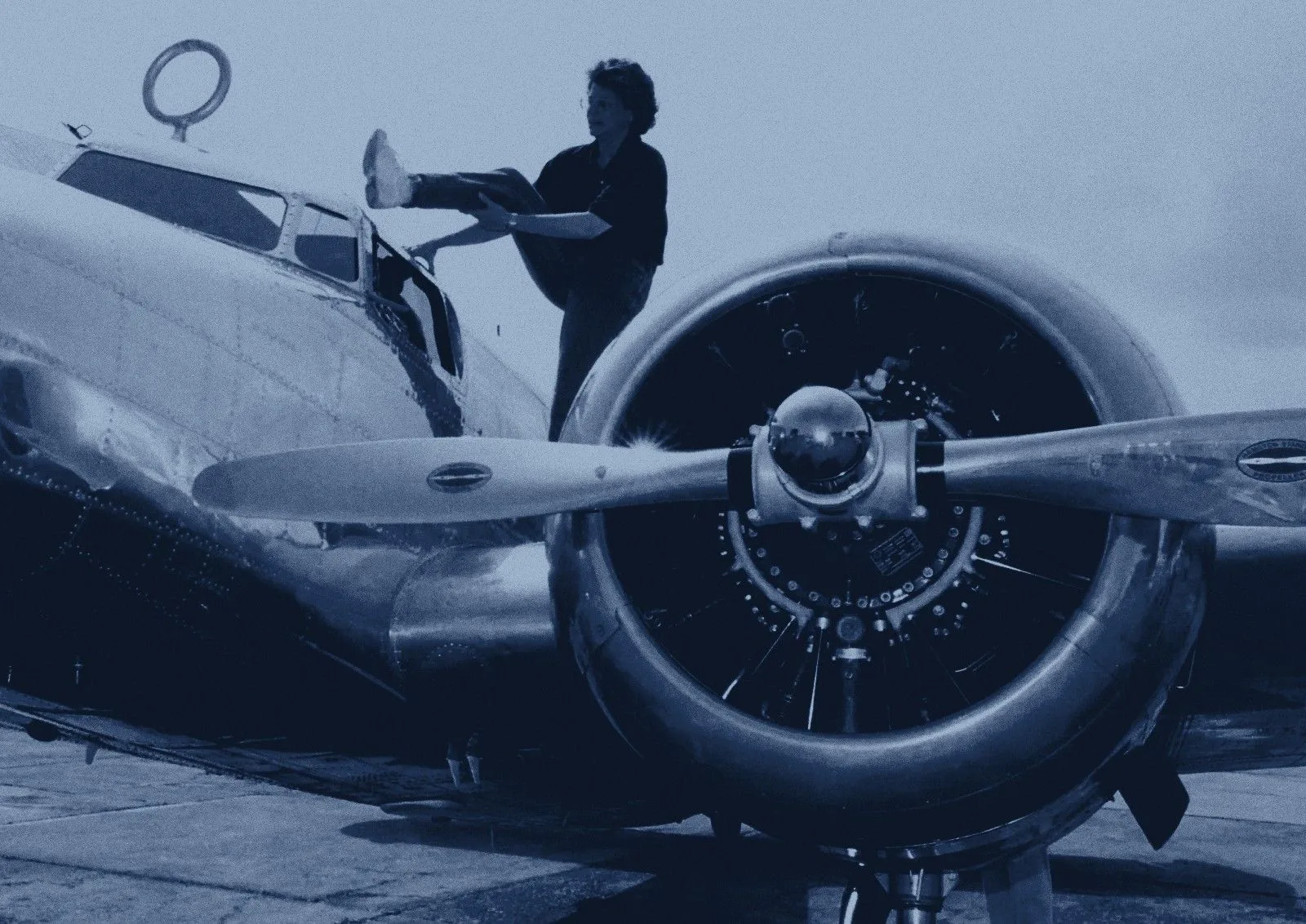
The team did its homework in advance by traveling to the Museum of Flight in Seattle, where an actual Lockheed Electra is on display.
Pettigrew had the chance to sit in the cockpit himself, which gave him a new appreciation for the flight: you cannot stand up in it, and it is extremely cramped for hour after hour of flying.
That preparation matters for identification. The Electra is a unique design. If the exposed material is aluminum, has the right shape, and shows components laid out the way they should be, the team will have both visual evidence and remote sensing evidence pointing the same direction.
Five Days, Planned by the Hour
The daily routine on the island is already mapped:
- Sleep aboard the ship and travel to the island each morning
- Move through the blasted channel to the beach
- Walk across the island on the route the team calls the Gallagher Highway to the launch point they call Club Fred
- Take a boat across the lagoon to the site
- Work the site, including lunch on location
- Retrace the route back to the ship at the end of the day
Everything is organized by category, with people assigned to specific tasks. As Pettigrew put it, every hour is already planned out, because five days does not leave room for improvisation.
The Announcement Will Come from the Island
One more detail makes this expedition different from the ones before it.
Because the team will have internet on site, they can communicate with the world directly from Nikumaroro. Pettigrew estimated an announcement around October 16.
Four filmmakers will be there as well — the caliber of crews who shoot for National Geographic, Netflix, PBS and the BBC — documenting the work daily, hourly, minute by minute.
A Seat at the Table Before the World Hears It
Seat at The Table exists to put people in the room before the news breaks, in direct conversation with the people doing the work. “Searching for Amelia” was exactly that.
To learn more about the series and how Sease Gerig builds conversations that matter, get in touch with our team.